Purpose and Background
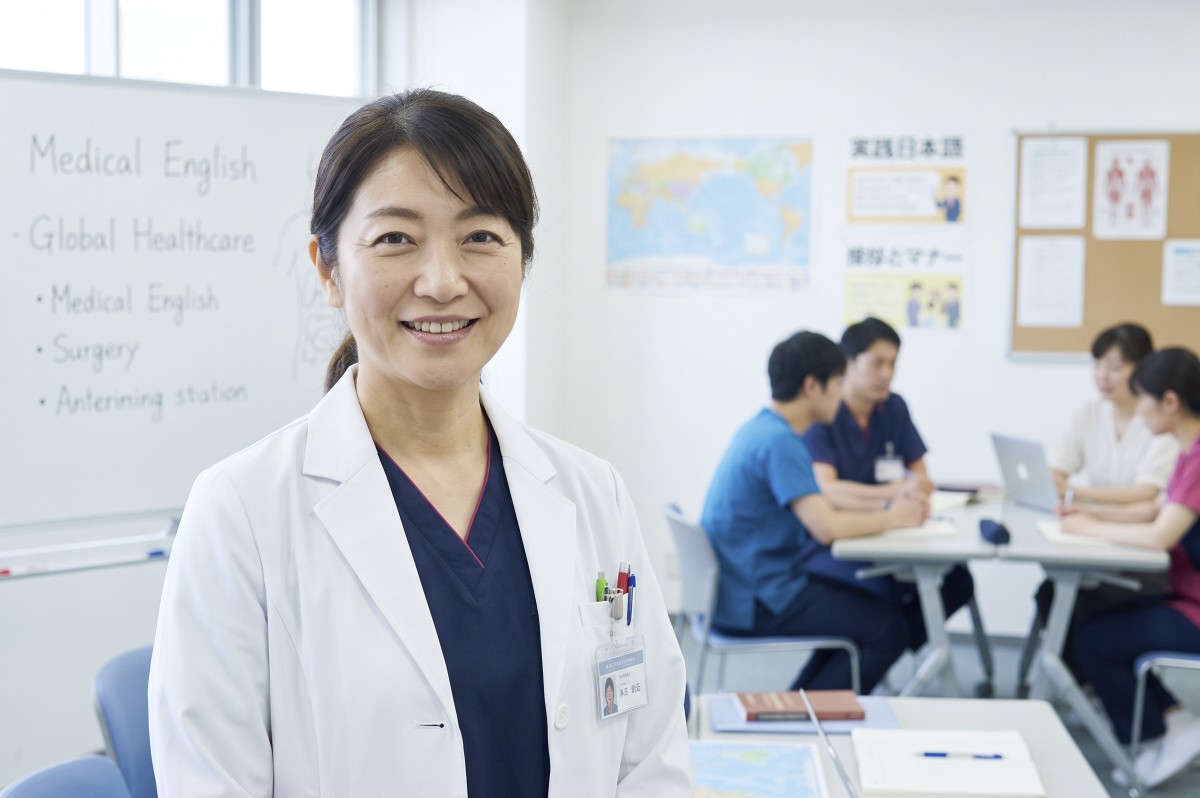
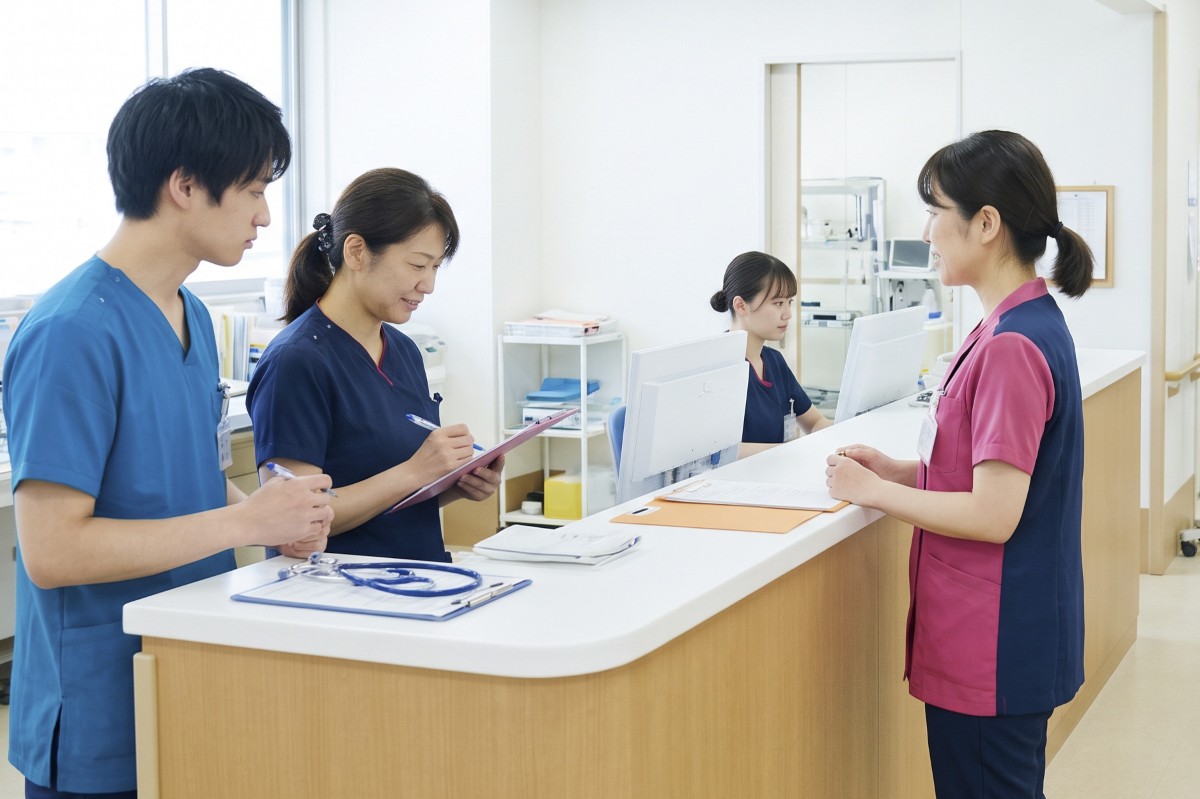
As society ages and healthcare becomes increasingly international, healthcare, nursing care, and welfare settings need people who combine specialist knowledge with practical skills and the ability to communicate clearly. Our department serves international students seeking further study or employment in Japan, as well as Japanese students aiming to become internationally certified registered nurses. We help students develop healthcare knowledge, Japanese and English proficiency, and practical skills to contribute in Japan and abroad.
To support these goals, students progress through four areas of learning: languages, business, healthcare, and global perspectives. By connecting these areas, we help each student build the capabilities to pursue further study, employment, or an international career.
Four Areas of Learning That Support Your Goals
Explore the four learning pillars introduced on our home page, with more detail about what students study and the goals they can pursue.
Practical Japanese
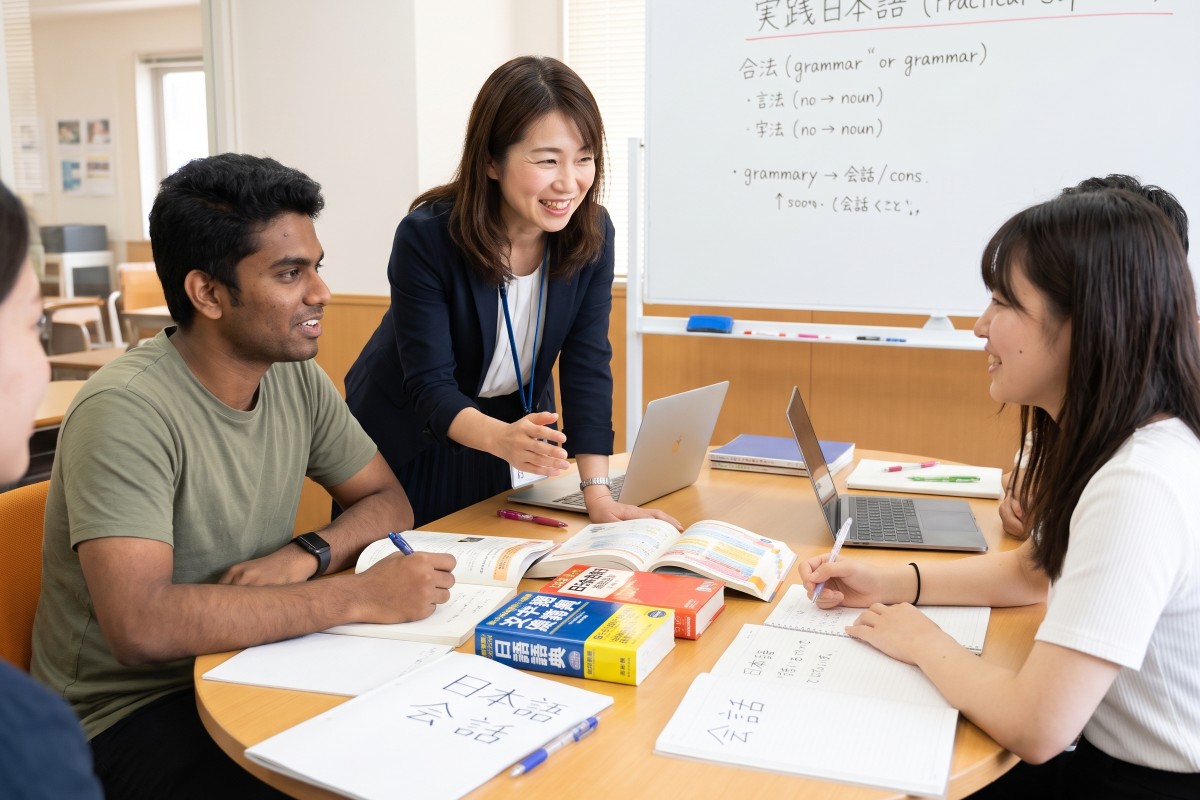
Develop the Japanese skills to express your ideas and share information in further study and at work. Build reading, writing, listening, and speaking skills for daily communication, classes, and workplace interactions.
- Examples of learning
- Integrated Japanese, medical Japanese, and Japanese for further study and employment
- Goal
- Build the skills needed to progress to a specialized program and aim for JLPT N2.
Practical Business Skills
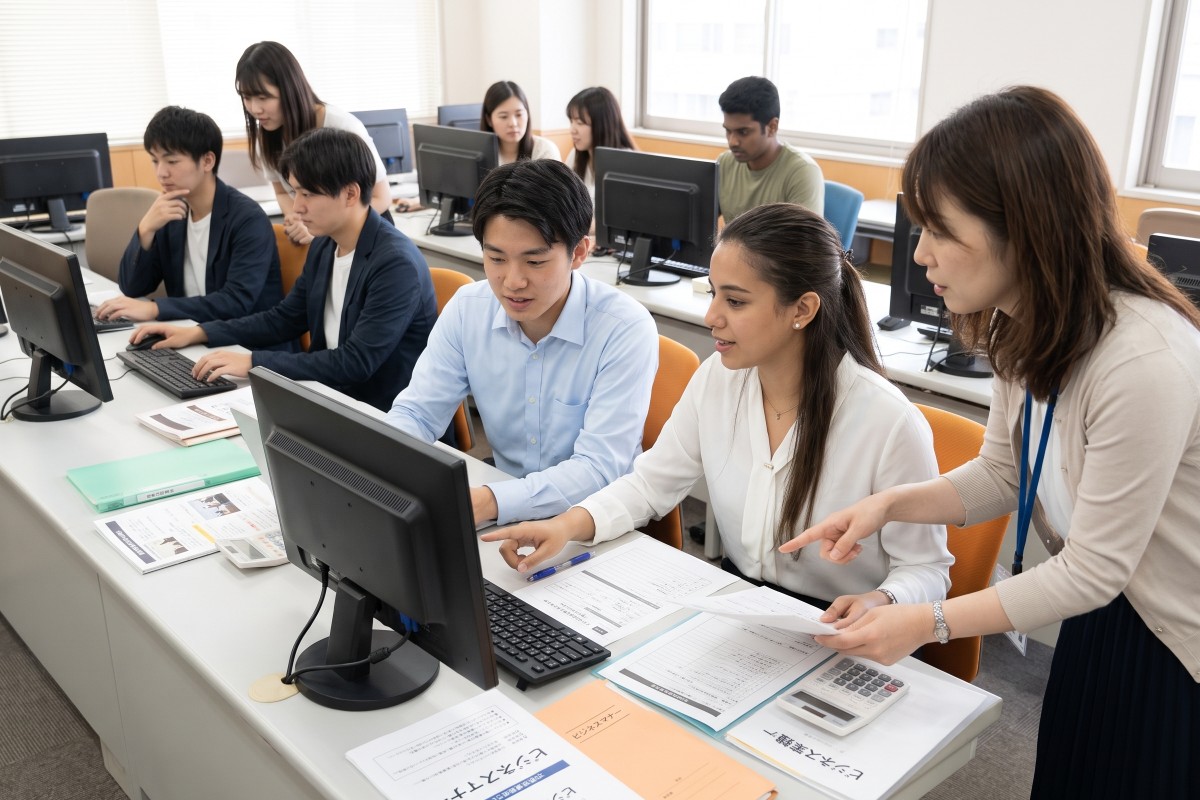
Learn the workplace etiquette and practical abilities needed in Japanese companies and medical institutions. Develop attentive service, workplace communication, and computer skills that can be applied on the job.
- Examples of learning
- Business etiquette, business Japanese, PC and IT fundamentals, medical administration, and medical office computing
- Goal
- Develop practical skills valued by Japanese employers and aim for a BJT score of 420 or higher.
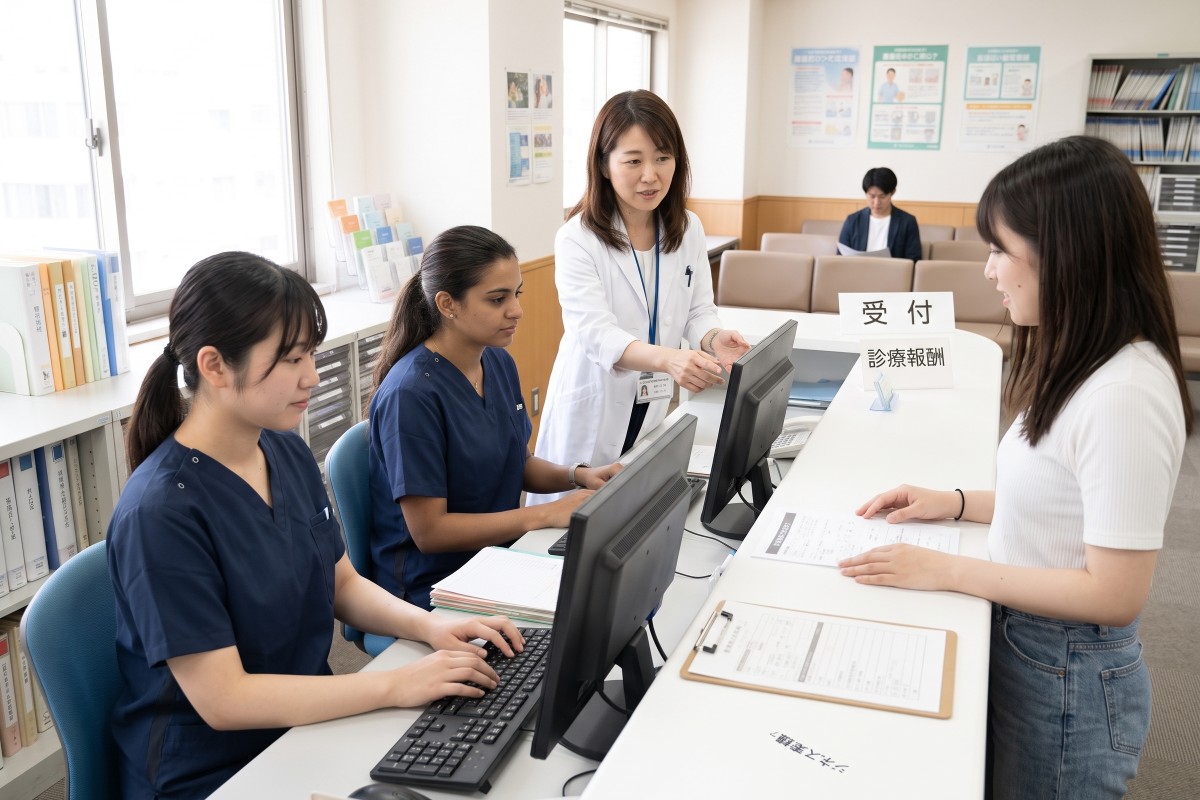
Healthcare Knowledge
Learn about the role of medical institutions and the fundamentals of medical administration. Deepen your understanding of reception and clinical support roles, and connect classroom learning with practical exercises and insight into healthcare settings.
- Examples of learning
- Medical administration, healthcare and welfare fundamentals, and learning about medical institutions
- Goal
- Work toward a medical administration qualification and build foundational knowledge for a healthcare career.

Global Healthcare
Build English proficiency and a global perspective to engage with healthcare across languages and cultures. Japanese students can also prepare for internationally certified registered nurse qualifications and pursue careers in healthcare overseas.
- Examples of learning
- English and medical English, intercultural communication, and preparation for international registered nurse examinations
- Goal
- Strengthen English skills and prepare for a career in international nursing or healthcare.
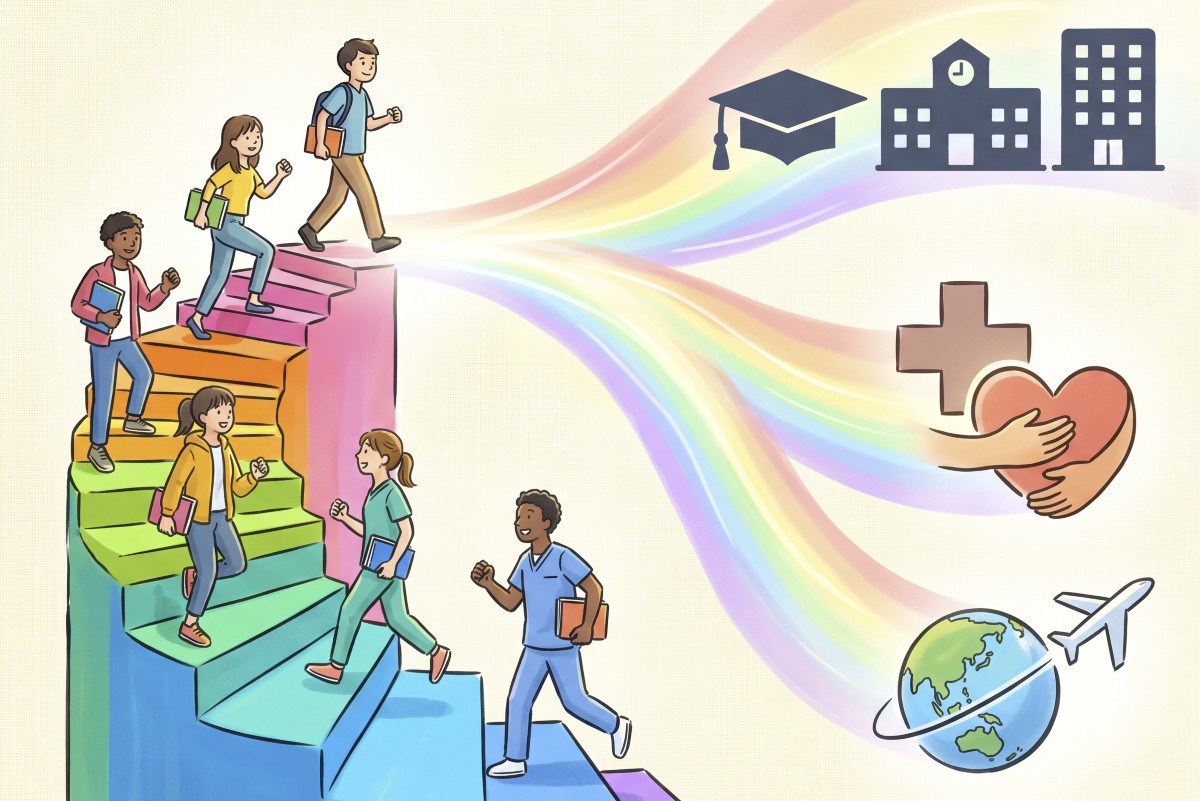
Connect Your Learning to Your Next Step
Japanese and business skills support further study and employment in Japan, while healthcare knowledge provides a foundation for working in medical institutions. English and a global perspective can open up broader career possibilities, including healthcare roles overseas. Each course develops these areas according to students’ goals.